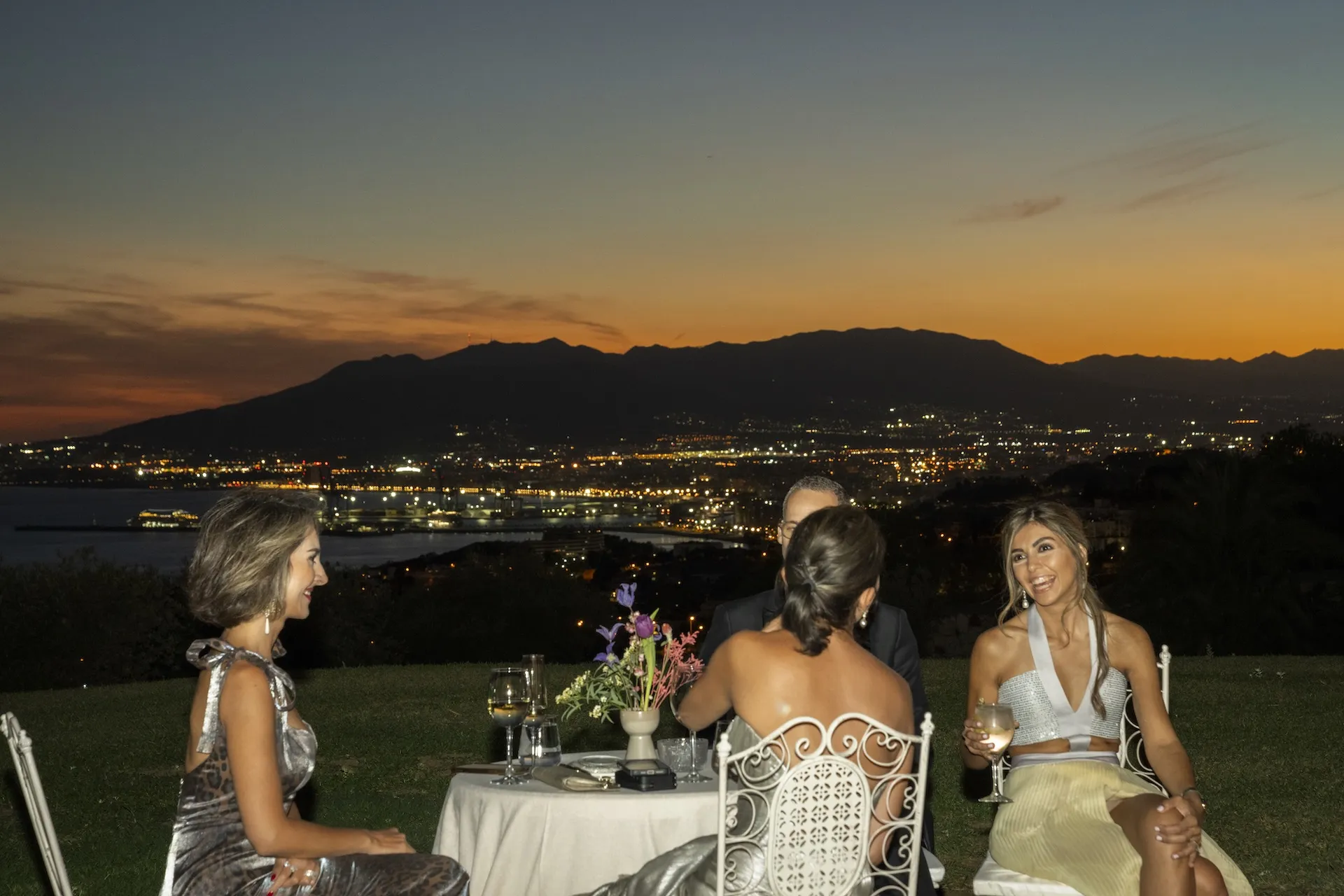

Receiving an invitation to a destination wedding in Spain often comes with a second question almost immediately:
What should I wear?
There is rarely one answer.
A celebration at a private estate in Marbella may call for something very different from an evening wedding in a historic Madrid setting. Mallorca brings its own relationship between landscape, architecture and outdoor spaces. And within the same wedding weekend, a welcome dinner, the wedding day and a farewell gathering may each have a different atmosphere.
The most reliable starting point is always the dress code chosen by the couple.
From there, the venue, time of day, season, terrain and wider programme can help guests interpret it with confidence.
At Sira Antequera, our team sees these details as part of the complete experience of a destination celebration. Guest attire contributes to the visual language of a wedding, but it should also allow people to feel comfortable, appropriate and completely present in the setting.
Destination wedding guest attire starts with the dress code
The words on the invitation matter more than assumptions about where the wedding is taking place.
If the couple has specified black tie, formal, cocktail or another dress code, that should always be the foundation for what you choose to wear.
The destination provides context. It does not replace the instructions.
When deciding what to wear to a destination wedding, consider three things together:
- The level of formality. What has the couple actually requested?
- The setting. Will the celebration take place in a palace, private estate, finca, historic property, hotel, garden or coastal venue?
- The practical environment. Will guests move through grass, gravel or historic stone? Is dinner outdoors? Will the celebration continue late into the evening?
Thinking in this order avoids one of the most common destination wedding attire mistakes: assuming that somewhere warm automatically means somewhere casual.
It does not.
How to interpret the most common destination wedding dress codes
Dress-code terminology can vary between couples and cultures, so the invitation or wedding website should always take precedence.
Still, several levels of formality appear frequently at destination celebrations.
Black tie
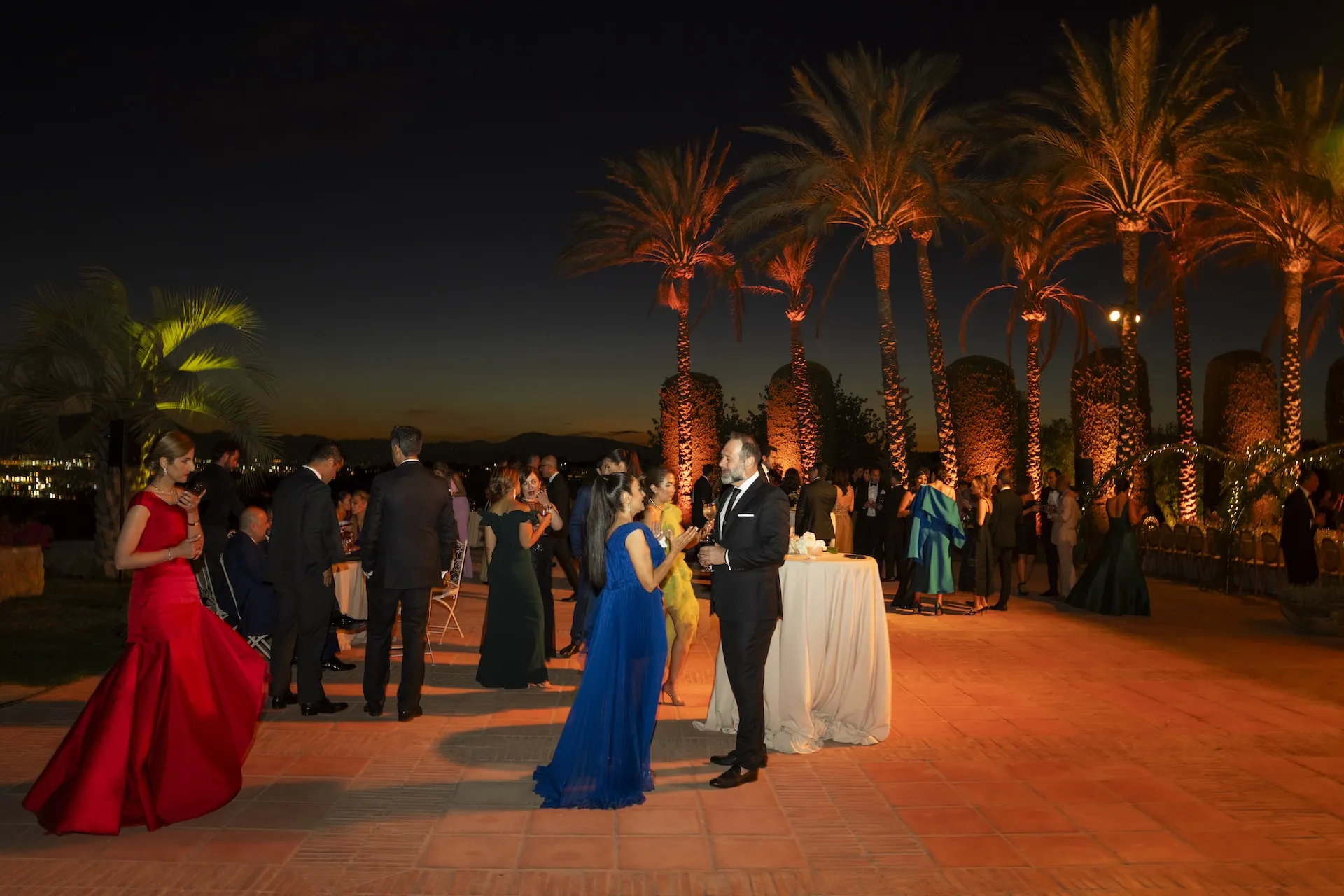
Black tie indicates a highly formal celebration, traditionally in the evening.
For women, this usually means a full-length gown or another particularly refined evening look. For men, the tuxedo remains the traditional reference.
The destination can influence colour, texture and styling, but it should not automatically reduce the requested level of formality.
A black-tie wedding in Madrid may find its natural setting within a palace, historic residence or sophisticated city venue. A black-tie celebration in Marbella may express the same level of formality through a lighter Mediterranean visual language.
The setting changes the expression, not necessarily the dress code.
Formal
Formal attire allows somewhat more flexibility while remaining polished.
Long dresses, sophisticated midi silhouettes, refined tailoring and formal suits can all work depending on the event.
The venue becomes particularly helpful here.
An evening celebration within historic architecture may invite more structured fabrics and styling. An outdoor private estate can accommodate lighter materials while retaining the same sense of occasion.
Cocktail
Cocktail attire sits between formal evening dressing and a more relaxed expression of elegance.
Elegant midi dresses, sophisticated separates or refined jumpsuits may work well. For men, a well-cut suit is generally the natural reference.
Context still matters.
Cocktail attire for a welcome evening overlooking the Mediterranean may feel different from cocktail attire in a city hotel, while remaining equally considered.
Relaxed elegance or smart casual
These terms are increasingly common for welcome events, daytime gatherings and farewell celebrations around destination weddings.
They offer greater freedom, but they should not be interpreted as an invitation to dress as though the occasion were simply another day on holiday.
Relaxed can still be refined.
Lighter fabrics, softer tailoring and a less ceremonial approach can create the appropriate balance.
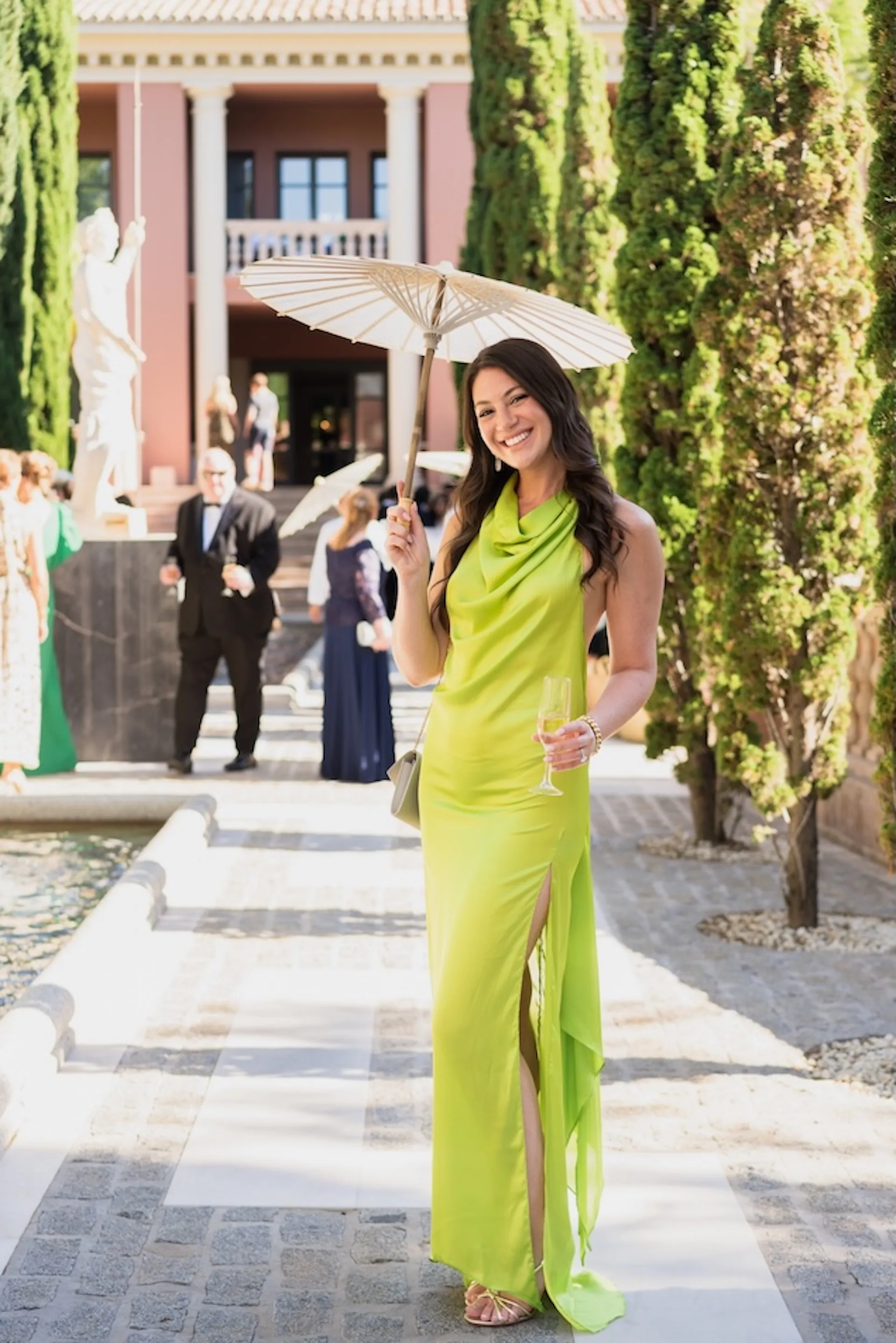
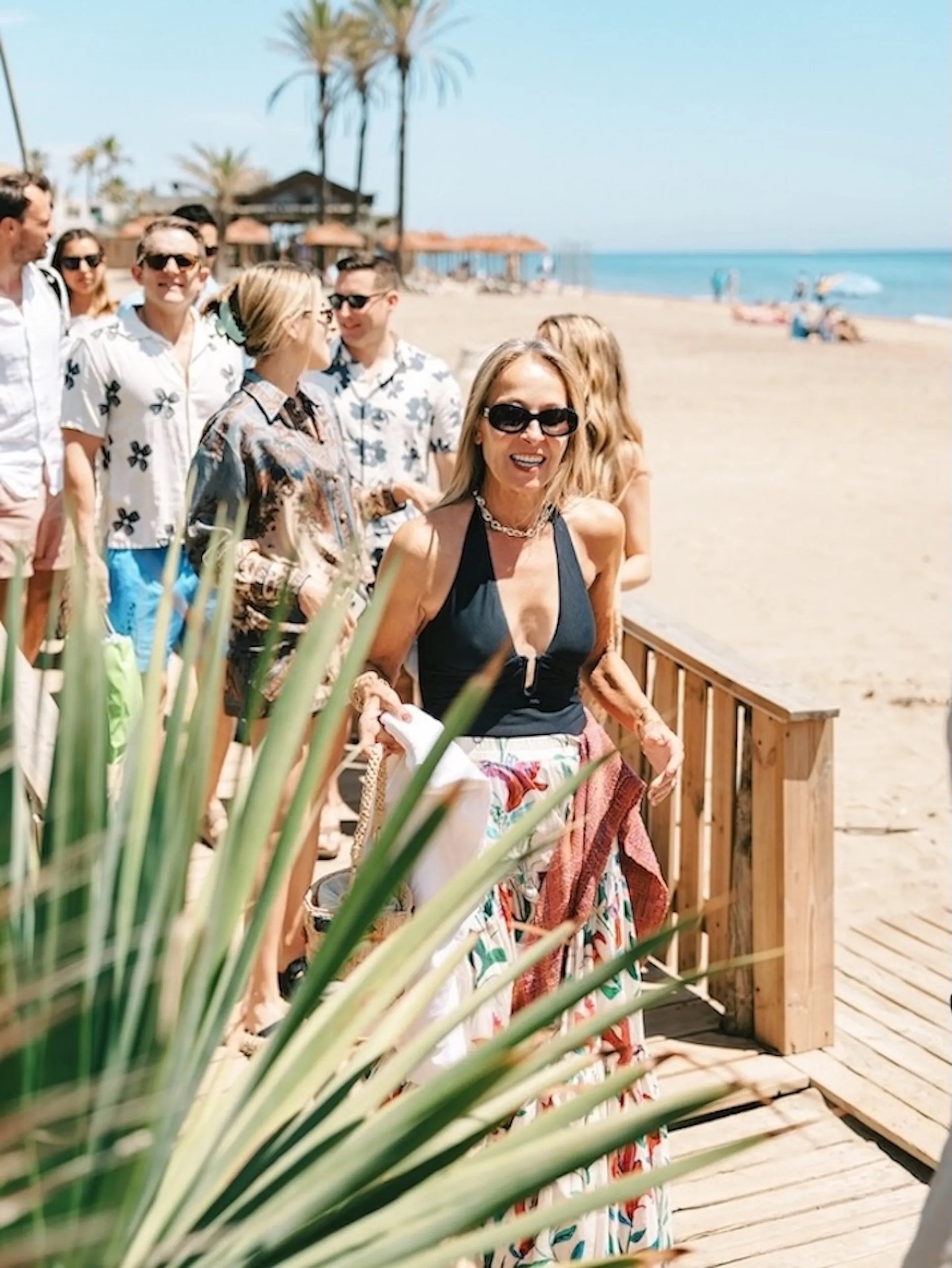
Dress for the venue, not only the weather
One of the defining qualities of a destination wedding is that the setting becomes part of the celebration.
It should also be part of the way guests think about what they wear.
This does not mean dressing according to a theme.
It means understanding the environment.
Private estates and fincas
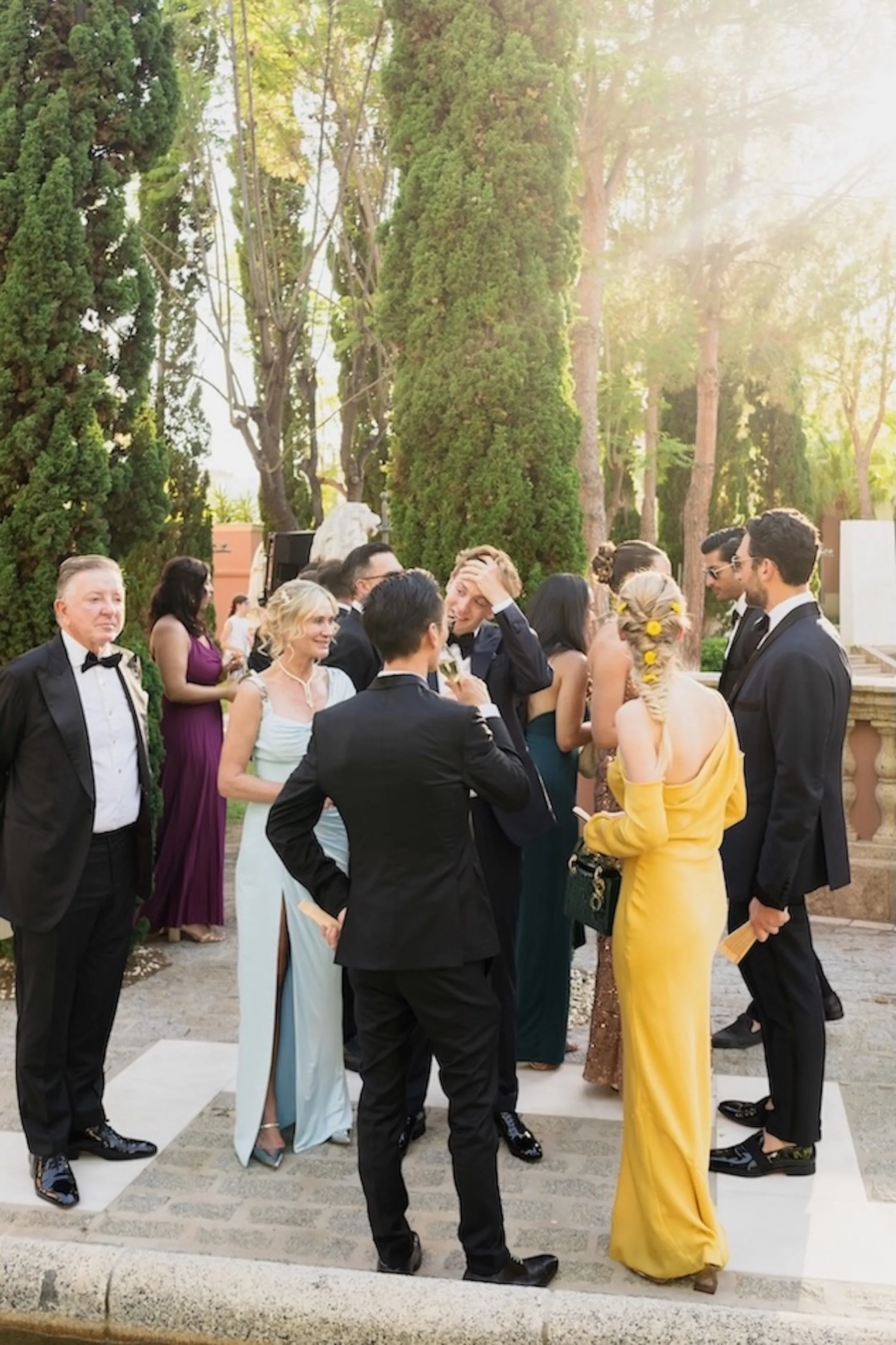
Private estates and historic fincas often combine formal architecture with gardens, courtyards, terraces and other outdoor spaces.
A ceremony may take place in one area, cocktails in another and dinner somewhere else entirely.
Footwear therefore deserves particular thought.
A very delicate heel may look elegant but become impractical on grass, gravel or historic stone. Choosing something that works with the terrain does not mean making the outfit less formal.
Layers can also be useful when guests move between indoor and outdoor spaces or when temperatures change after sunset.
Palaces and historic city venues
Historic city settings naturally create a different context.
Architecture, scale and evening lighting can support more structured tailoring, longer silhouettes and sophisticated accessories.
A destination wedding in Spain should never automatically be interpreted through a beach or resort aesthetic.
The actual venue matters far more.
Mediterranean and coastal settings
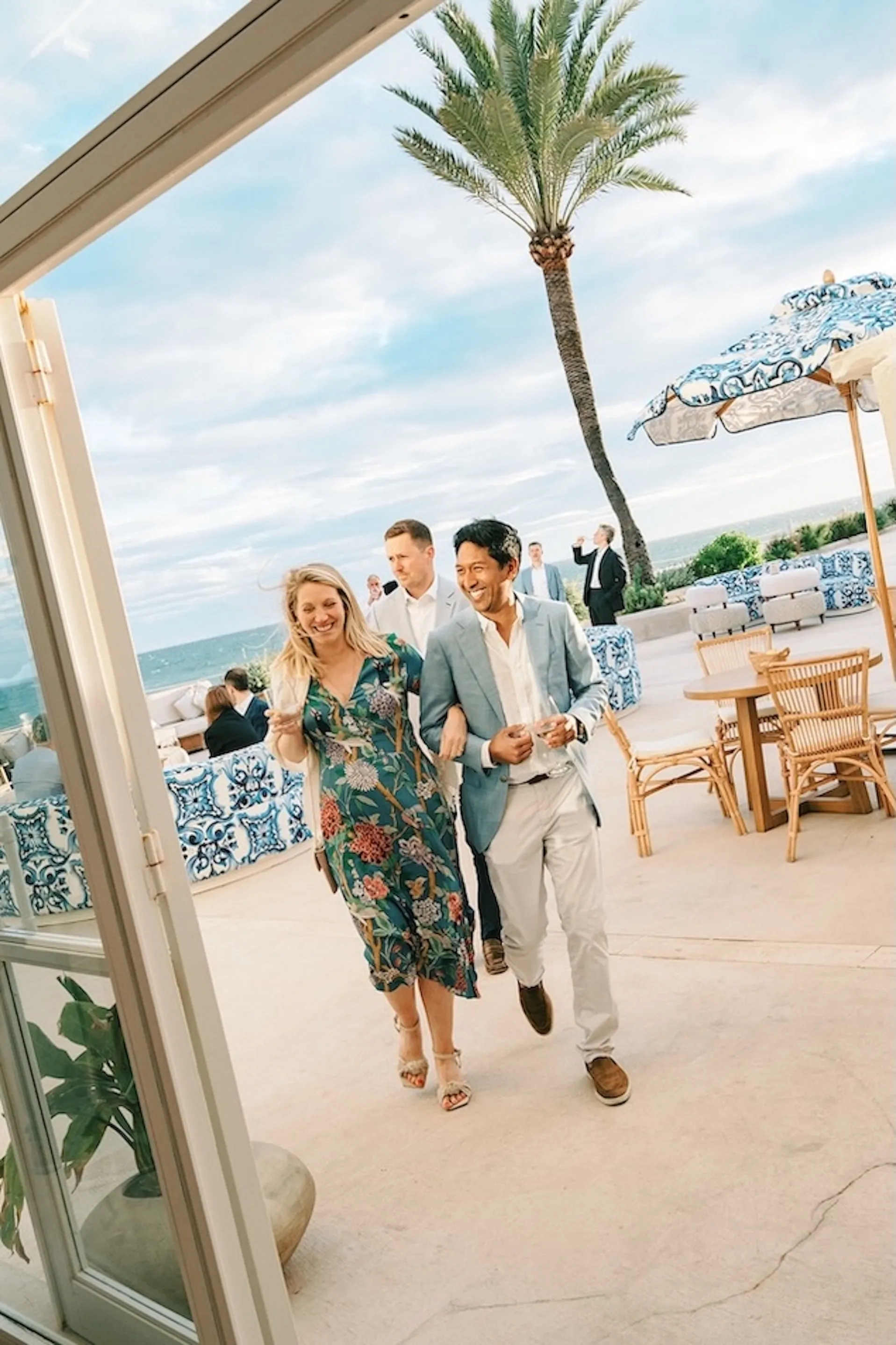
Marbella, Mallorca and other Mediterranean destinations introduce light, landscape and outdoor living into many celebrations.
When the dress code allows it, lighter fabrics, softer textures and considered colour can work beautifully.
But Mediterranean does not necessarily mean beach.
Many destination weddings take place in private estates, historic fincas, hotels and architecturally significant properties where the atmosphere remains highly refined.
The place can influence an outfit without turning it into a costume.
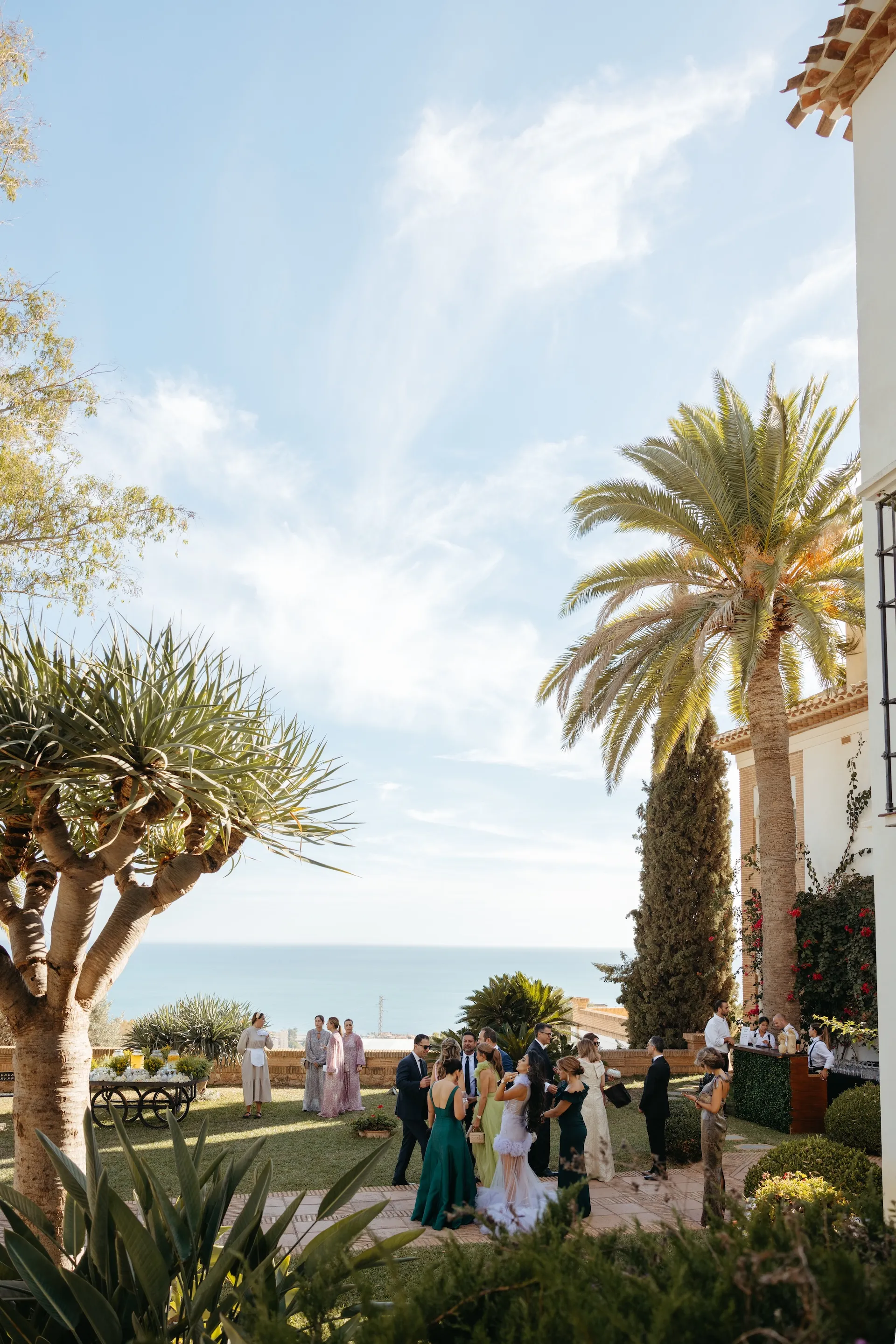
What to wear to a destination wedding in Marbella, Mallorca or Madrid
Spain offers very different wedding environments.
Knowing the specific destination and venue is therefore much more useful than relying on a single idea of what a “Spanish destination wedding” looks like.
What to wear to a destination wedding in Marbella
Marbella combines Mediterranean light with private estates, villas, gardens and sophisticated hospitality.
Outdoor celebrations are common, making terrain and temperature important considerations alongside the dress code.
A formal wedding can still feel entirely natural here. The key is balancing the level of refinement requested by the couple with the practical reality of the setting.
If you are attending or planning a celebration in the area, explore Sira Antequera's approach to weddings in Marbella.
What to wear to a destination wedding in Mallorca
Mallorca can move effortlessly between countryside fincas, historic architecture, dramatic landscapes and coastal surroundings.
The specific venue is particularly important.
A wedding at a traditional finca can call for different practical decisions from a celebration inside a formal hotel or historic property, even when both have a similar dress code.
Rather than relying on a generic idea of “island style”, consider the architecture, terrain and way guests will move through the celebration.
Discover more about Sira Antequera's approach to weddings in Mallorca.
What to wear to a destination wedding in Madrid
Madrid offers a more urban expression of destination wedding style.
Historic palaces, hotels and cultural venues can naturally lend themselves to formal and black-tie celebrations, although the couple's guidance always remains the reference.
Here, practical considerations may be different from those of a coastal estate, but the principle remains the same:
the dress code comes first; the destination helps interpret it.
Explore Sira Antequera's approach to weddings in Madrid.
What to wear across a destination wedding weekend
A destination wedding often includes more than the ceremony and reception.
There may be a welcome dinner, pre-wedding gathering and farewell brunch or lunch.
Guests should not assume that every event requires the same level of formality.
Welcome event
The welcome celebration is often more relaxed than the wedding itself.
Depending on the guidance provided, cocktail attire, relaxed elegance or sophisticated evening dressing may work particularly well.
This can also be a natural moment to respond more visibly to the destination without anticipating the wedding-day look.
Wedding day
The principal dress code belongs to the wedding day.
If the invitation specifies formal or black tie, that guidance should take precedence over assumptions about climate or destination.
Practical adaptations — appropriate footwear, suitable fabrics or an elegant layer for later in the evening — allow the outfit to work with the environment without lowering its formality.
Farewell brunch or lunch
The final gathering usually allows a more relaxed approach.
Refined daytime clothing, sophisticated separates and comfortable but considered looks may all be appropriate.
Across the whole weekend, the objective is not necessarily to create several elaborate outfits.
It is to understand the character of each event.
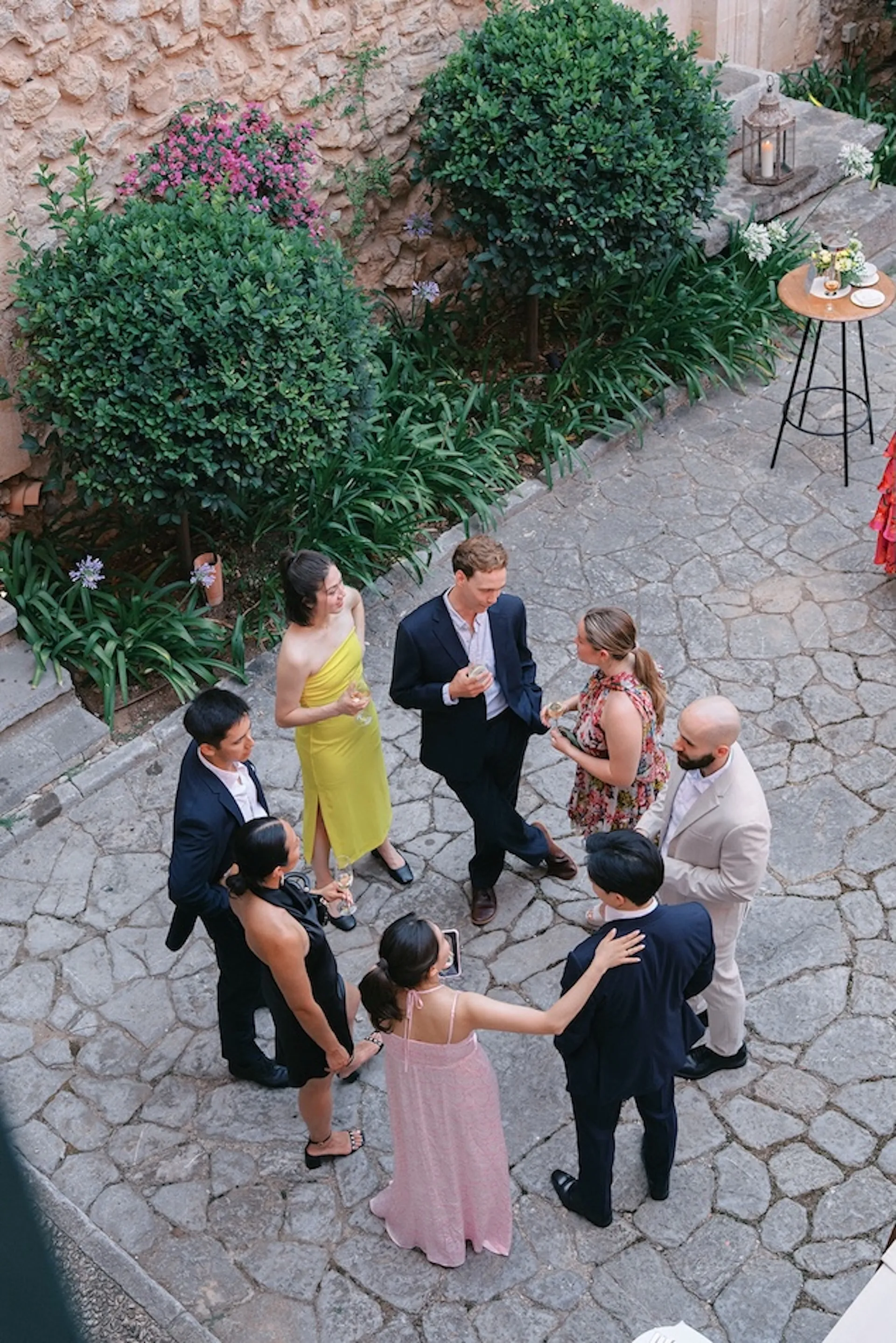
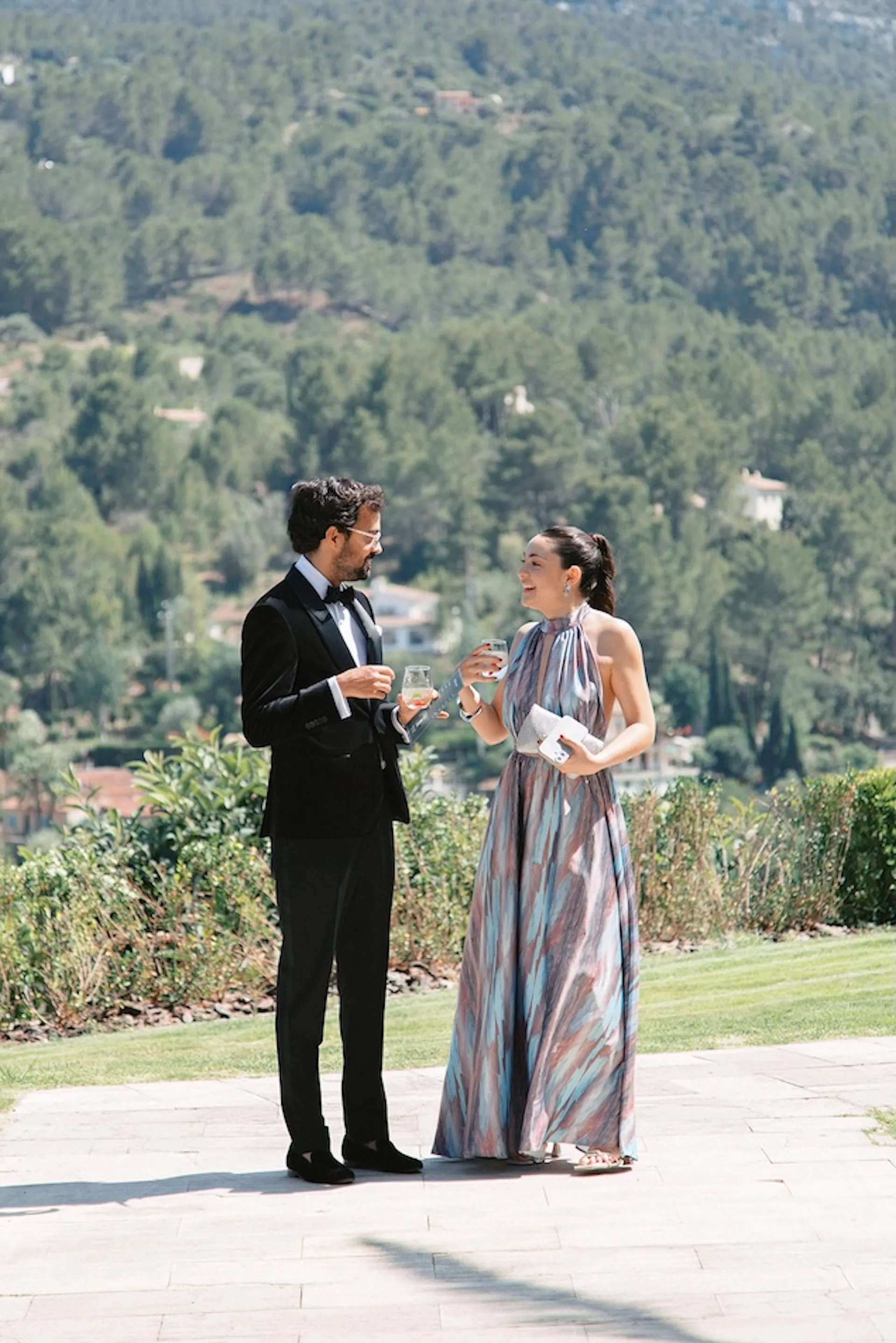
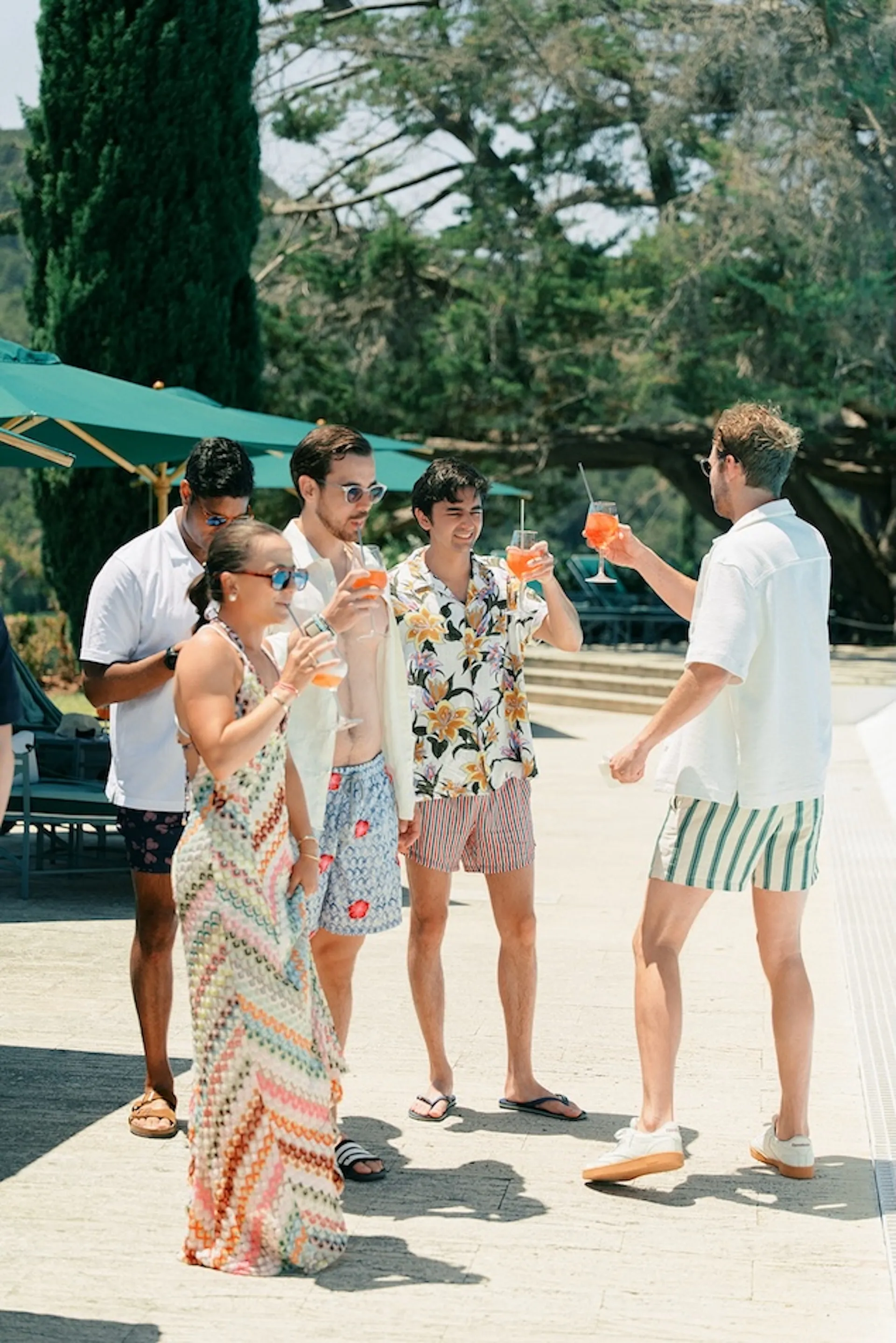
What does Mediterranean elegance really mean?
“Mediterranean” has become a widely used reference in weddings, travel and fashion.
For guest attire, it is more useful to respond to the qualities of the actual setting than to reproduce a predetermined aesthetic.
- Natural light.
- Warm evenings.
- Historic stone.
- Gardens and terraces.
- Indoor and outdoor spaces existing together.
These qualities can influence colour, texture and movement without requiring guests to adopt a recognisably “Mediterranean” uniform.
An elegant outfit should belong to the celebration first and the destination second.
That distinction helps destination wedding attire feel natural rather than theatrical.
Comfort is part of dressing well
An outfit that looks beautiful but prevents you from experiencing the celebration comfortably is rarely the right choice.
Destination weddings can involve more movement than guests initially expect.
- Gardens.
- Different areas within an estate.
- Outdoor ceremonies.
- Extended cocktail periods.
- Dancing.
- Transfers or transitions between spaces.
- Before making a final decision, consider:
- the terrain
- the requested level of formality;
- whether the celebration is indoors or outdoors;
- the time of day;
- how long you will wear the outfit;
- possible changes in temperature;
- whether the programme includes several locations.
Comfort does not mean compromising elegance.
The right choice allows you to remain present in the celebration instead of thinking constantly about what you are wearing.
Common destination wedding guest attire mistakes
Several assumptions can make choosing an outfit more complicated than it needs to be.
Assuming destination means casual
A wedding abroad can be every bit as formal as a wedding closer to home.
Always follow the invitation before making assumptions about the climate or setting.
Treating every wedding in Spain as a beach wedding
Spain offers palaces, city hotels, historic estates, countryside fincas, gardens and private residences alongside coastal venues.
Dress for the actual celebration.
Ignoring the venue
Knowing whether you will be walking through gardens, courtyards, grass, gravel or formal interiors can prevent beautiful but impractical decisions.
Dressing for the afternoon and forgetting the evening
Warm daytime temperatures do not always continue late into the night.
For celebrations with a significant outdoor component, an elegant additional layer may be a useful part of the outfit.
Overinterpreting the destination
Guests do not need to dress “Spanish”.
Nor does a wedding in Marbella or Mallorca automatically require a resort aesthetic.
Respond to the atmosphere rather than performing it.
When in doubt, follow the couple's guidance
The invitation and wedding website should always be the primary references.
For destination weddings, couples and their planning team may also provide practical information about the terrain, outdoor spaces, weather or different dress codes throughout the programme.
If something remains unclear, asking is better than guessing.
For a broader view of the decisions that shape a celebration abroad, see our destination wedding checklist for Spain.
Dress for the celebration, not simply the destination
The best destination wedding guest attire feels appropriate without feeling overthought.
It respects the couple's dress code, responds naturally to the venue and allows guests to enjoy the experience comfortably.
Spain offers extraordinary variety.
A formal evening in Madrid, a private estate celebration in Marbella and a gathering at a Mallorca finca may all be destination weddings while creating completely different contexts for what guests wear.
That is precisely why the destination itself should never be the only guide.
At Sira Antequera, our team approaches every celebration as a complete composition of place, atmosphere, design, hospitality and experience.
If you are considering a celebration in Spain, discover our approach as a luxury wedding planner in Spain.